

2026 Best Indoor Lighting Manufacturers for Global Buyers
Choosing the 2026 Best Indoor Lighting Manufacturers for Global Buyers requires more than comparing catalog prices. Buyers must examine optical performance, energy use, certifications, warranty terms, and after-sales support. A beautiful fixture can still disappoint when glare tires office workers or replacement parts arrive months late.
The International Energy Agency’s Energy Efficiency 2024 report continues to identify efficient lighting as an important energy-saving opportunity. The U.S. Department of Energy’s Solid-State Lighting R&D Opportunities report also highlights ongoing improvements in LED efficacy, controls, and connected systems. These findings matter in warehouses, hotels, hospitals, and homes. Every watt saved becomes visible on a larger project’s utility bill.
“Light is the most powerful drug we have,” says George Brainard, a leading researcher in light and circadian biology. His observation explains why Indoor Lighting should be judged beyond brightness. Color temperature, flicker, glare, and nighttime exposure can influence comfort and human routines. However, no single specification guarantees a better result. Context still matters. A 4000K office panel may support visual tasks, yet feel harsh in a bedroom. A warm decorative lamp may look inviting, but provide insufficient task light.
This guide compares manufacturers through practical evidence, including photometric files, LED lifespan claims, factory quality systems, and project references. It also considers regional availability and technical support. The ranking is useful, not perfect. Supplier data can be selective, and real installations sometimes reveal uncomfortable gaps. Global buyers should verify every critical claim before signing a contract.
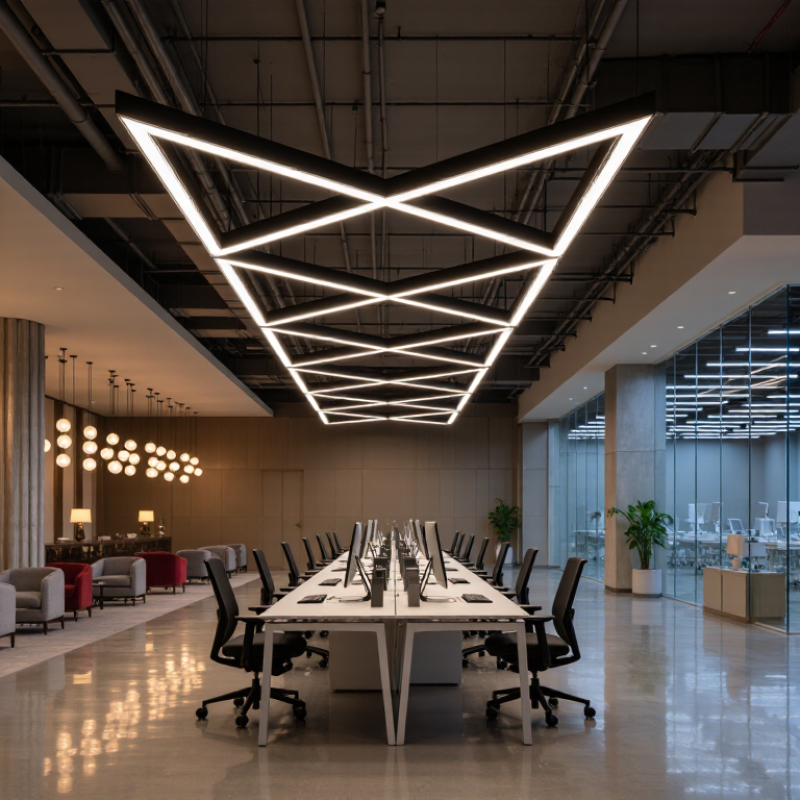
Table of Contents
[Hide]
Indoor Lighting Manufacturing: Scope, Products, and Global Market Role
2026 Best Indoor Lighting Manufacturers for Global Buyers
Indoor Lighting Manufacturing: Scope, Products, and Global Market Role
Indoor lighting manufacturing covers design, component sourcing, assembly, testing, and after-sales support. Its products include downlights, panel lights, track systems, linear fixtures, pendant lamps, and smart controls. Each category serves different spaces, from office ceilings to hotel corridors and retail displays.
Reliable manufacturers usually combine engineering knowledge with repeatable production methods. They review beam angles, color consistency, glare control, thermal performance, and driver compatibility before shipment. A practical factory should provide photometric files, sample reports, material details, and clear production timelines. Buyers also need traceability for key components and evidence of routine quality inspections.
Details matter.
During supplier evaluation, I would request a working sample, not only polished catalog images. I would test dimming behavior, surface temperature, installation fit, and light stability over several hours. Independent laboratory reports can strengthen confidence, but paperwork alone is not enough. Some manufacturers communicate well before an order, then respond slowly when defects appear. That risk deserves attention.
Global buyers also expect flexible packaging, multilingual documentation, spare parts, and export experience. However, “best” depends on project needs, target market, budget, and maintenance plans. A supplier suited to a residential renovation may not handle a large commercial rollout. Even experienced buyers can overlook replacement access or local electrical compatibility. That mistake becomes expensive after installation.
2026 Best Indoor Lighting Manufacturers for Global Buyers - Indoor Lighting Manufacturing: Scope, Products, and Global Market Role
Buyer-oriented overview of indoor lighting manufacturing categories, technical specifications, compliance requirements, and global market applications
| Manufacturing Segment | Typical Indoor Products | Common Technical Parameters | Relevant Standards and Tests | Main Applications | Global Buyer Considerations |
|---|---|---|---|---|---|
| Commercial Downlight Manufacturing | Recessed downlights, surface-mounted downlights, adjustable spotlights, and trimless architectural fixtures | Typically 6–40 W; 80–120 lm/W; 2700–6500 K; CRI commonly 80 or 90; beam angles approximately 15°–60% | IEC 60598-1, IEC 60598-2-2, IEC 61347, IEC 62031, photometric testing, electrical safety and EMC testing | Retail stores, offices, hotels, restaurants, galleries, and residential interiors | Confirm ceiling cut-out dimensions, driver replacement options, glare control, dimming compatibility, and photometric files such as IES or LDT |
| Linear and Panel Lighting Manufacturing | LED panels, linear suspended fixtures, recessed linear systems, modular office luminaires, and edge-lit panels | Commonly 20–60 W; approximately 90–130 lm/W; 3000–6500 K; low-glare versions often target UGR <19 | IEC 60598-1, IEC 60598-2-1, IEC 62471, EN 12464-1 for workplace lighting design, LM-79 for photometric performance | Open-plan offices, schools, hospitals, corridors, supermarkets, and industrial administration areas | Evaluate uniformity, flicker performance, glare rating, mounting accessories, emergency-lighting integration, and lifetime warranty terms |
| Track and Display Lighting Manufacturing | Track spotlights, retail projectors, cabinet lights, accent luminaires, and museum-grade display fixtures | Typically 8–45 W; narrow to medium beam distributions; CRI 90+ options; selectable CCT and interchangeable lenses are common | IEC 60598 series, IEC 62471 photobiological safety, LM-79 testing, color consistency and glare assessment | Retail, museums, exhibitions, jewelry stores, hospitality, and premium residential interiors | Check color consistency, R9 performance, beam accuracy, track-system compatibility, thermal management, and replacement lens availability |
| Decorative and Hospitality Lighting Manufacturing | Pendant lights, chandeliers, wall sconces, table lamps, floor lamps, and custom decorative assemblies | LED or replaceable-lamp designs; commonly 2200–4000 K; dimmable configurations; materials may include glass, metal, fabric, wood, or acrylic | IEC 60598-1, applicable luminaire-part standards, flammability assessment for textile components, electrical safety and EMC testing | Hotels, restaurants, residential projects, lounges, offices, and public interiors | Verify material documentation, assembly tolerances, voltage configuration, dimmer compatibility, packaging protection, and spare-part support |
| High-Bay and Industrial Indoor Lighting Manufacturing | LED high bays, low bays, warehouse fixtures, vapor-tight luminaires, and machine-area lighting | Often 80–240 W; approximately 120–180 lm/W; 4000–6500 K; IP65 or higher is common for dusty or humid environments | IEC 60598-1, IEC 60598-2-1, IEC 60529 for IP ratings, IEC 62471, LM-79, surge and thermal testing | Warehouses, factories, logistics centers, workshops, sports halls, and distribution facilities | Assess mounting height, operating temperature, surge protection, controls compatibility, maintenance access, and measured lumen depreciation |
| Emergency and Exit Lighting Manufacturing | Emergency bulkheads, exit signs, emergency downlights, central-battery luminaires, and self-contained units | Battery-backed operation; emergency duration commonly 1–3 hours depending on local code and project specification; maintained or non-maintained modes | IEC 60598-2-22, ISO 7010 safety symbols, local fire and building regulations, battery safety and emergency-duration testing | Commercial buildings, hotels, hospitals, transport facilities, schools, factories, and public venues | Confirm photometric coverage, test-button or self-test functions, battery replacement cycle, signage visibility, and country-specific approval requirements |
| Smart and Connected Indoor Lighting Manufacturing | DALI-2 luminaires, sensor-integrated fixtures, Bluetooth or wireless-control systems, tunable-white products, and networked lighting platforms | Dimming from 1–100% may be available; 2200–6500 K tunable-white ranges are common; occupancy and daylight sensors support automated control | IEC 62386 for DALI, IEC 62471, EMC requirements, radio-equipment regulations where wireless communication is used, and cybersecurity assessment for connected systems | Smart offices, hotels, campuses, retail buildings, hospitals, and energy-management projects | Check protocol interoperability, gateway requirements, software ownership, data security, firmware support, commissioning tools, and local wireless approvals |
| Residential Indoor Lighting Manufacturing | Ceiling fixtures, recessed lights, under-cabinet lights, reading lamps, bathroom luminaires, and modular home-lighting systems | Typically 3–50 W; 2700–4000 K for living areas; dimmable and smart versions are widely available; IP44 or higher may be required in splash zones | IEC 60598 series, IEC 61347, IEC 62031, IEC 60529 for ingress protection, and applicable household electrical-safety requirements | Living rooms, bedrooms, kitchens, bathrooms, corridors, and home offices | Review installation method, household voltage, plug or wiring configuration, dimmer compatibility, color consistency, and after-sales replacement availability |
| Custom Project and OEM/ODM Manufacturing | Project-specific luminaires, private-label products, modified housing designs, custom optics, and complete lighting packages | Specifications are defined by project brief; may include custom wattage, CCT, CRI, beam angle, finish, mounting, controls, and packaging | Applicable IEC or regional standards, photometric reports, EMC and safety testing, RoHS or material declarations where required, and project-specific approvals | Large commercial developments, hospitality chains, retail rollouts, architectural projects, and distributor programs | Use approved samples, signed technical drawings, quality-control checkpoints, tooling agreements, production audits, and clearly defined intellectual-property terms |
Core global buyer checklist:
Confirm electrical voltage and frequency, required certifications, photometric files, color-rendering data, lumen-maintenance evidence, warranty coverage, minimum order quantity, lead time, packaging standards, spare parts, and local installation-code compliance before placing an order.
Related Posts
-
5 Essential Tips for Reducing After-Sales Service Costs on the Best Indoor Lighting Solutions
-

Innovative Landscape Lighting Solutions Set to Shine at 2025 China Import and Export Fair with Market Growth Projections
-
2026 Top Led Lighting System Innovations You Need to Know?
-
Maximizing After Sales Support and Reducing Maintenance Expenses for Led Fixture Lights
-

Unlocking the Benefits of Path Lighting: Essential Tips for Global Buyers
-
Revolutionizing Illumination: How Leading Lighting Solutions Enhance Energy Efficiency by 30% in Modern Spaces