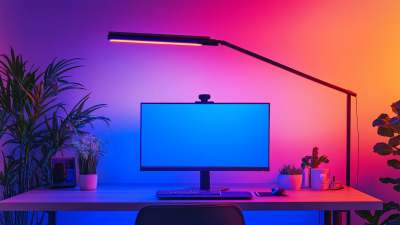
How to Choose the Right Led Lighting System for Your Home
Choosing the right LED lighting system for your home can be a daunting task. With so many options available, it’s easy to feel overwhelmed. Expert Sarah Johnson, a renowned lighting designer, emphasizes, "The right LED lighting system enhances your space while saving energy." This advice resonates with many homeowners.
LED lighting systems come in various styles and functionalities. They can alter the mood of a room and influence how you feel. From bright kitchen lights to soft living room glows, the choice matters. However, selecting the wrong system can lead to dissatisfaction. A poorly chosen design may result in harsh lighting or energy waste.
Consider your space and needs carefully. What works for one room might not suit another. Take time to evaluate your preferences. You might find yourself reflecting on your choices and their impact on your daily life. After all, a well-planned LED lighting system can truly transform your home.
Understanding the Basics of LED Lighting Technology
Understanding LED lighting technology is essential for selecting the right system for your home. LEDs, or Light Emitting Diodes, are far more energy-efficient than traditional bulbs. They can last up to 25,000 hours, compared to just 1,000 hours for incandescent bulbs. This means lower energy bills over time and less frequent replacements.
When considering LED lights, pay attention to lumens and color temperature. Lumens measure brightness, while color temperature affects the ambiance of a room. For example, a warm white (2700K) is ideal for cozy spaces, while cool white (4000K) works well in work areas. A report by the Department of Energy indicates that switching to LED could save the U.S. over $30 billion in energy costs by 2027. It's quite significant!
Tip: Always check the wattage equivalent to ensure desired brightness. Most LED bulbs now indicate their incandescent equivalents for easy selection. Another tip is to consider smart LED options. These can be controlled remotely, adding convenience and energy savings. However, remember that smart technology can sometimes fail or be difficult to set up. It's a balance of convenience versus complexity.
Understanding Different Types of LED Bulbs
Evaluating Your Home's Lighting Needs and Preferences
Evaluating your home's lighting needs is crucial when choosing the right LED lighting system. Start by considering the purpose of each room. Bright lighting may work well in kitchens or workspaces, while softer lighting suits bedrooms or living areas. Take a moment to reflect on your daily routines. Do you often read at night? If so, think about adding adjustable lighting options.
Next, look at your home's layout. Observe where natural light enters during the day. You might find some rooms are naturally bright, requiring less artificial light. For darker spaces, you can opt for fixtures that enhance brightness. Consider your personal preferences as well. Some people prefer warm tones, while others enjoy cooler light. This choice can affect the mood in your home.
Lastly, evaluate the existing fixtures. Are they functional and aesthetically pleasing? If your lighting feels outdated, it may be time for a change. You might also feel hesitant about a complete redesign. Start small, perhaps by replacing a single fixture. Experimenting with different styles will help you discover what you truly like.
How to Choose the Right Led Lighting System for Your Home - Evaluating Your Home's Lighting Needs and Preferences
| Room Type |
Lighting Purpose |
Brightness (Lumens) |
Color Temperature (Kelvin) |
Energy Efficiency |
| Living Room |
Ambient Lighting |
1200-1800 |
3000K - Warm White |
A+ |
| Kitchen |
Task Lighting |
2000-3000 |
4000K - Cool White |
A++ |
| Bedroom |
Accent Lighting |
800-1200 |
2700K - Soft White |
A+ |
| Bathroom |
Task & Ambient Lighting |
1000-1500 |
4000K - Neutral White |
A++ |
| Home Office |
Task Lighting |
1500-2500 |
3500K - Bright White |
A+ |
Comparing Different LED Lighting Systems and Options
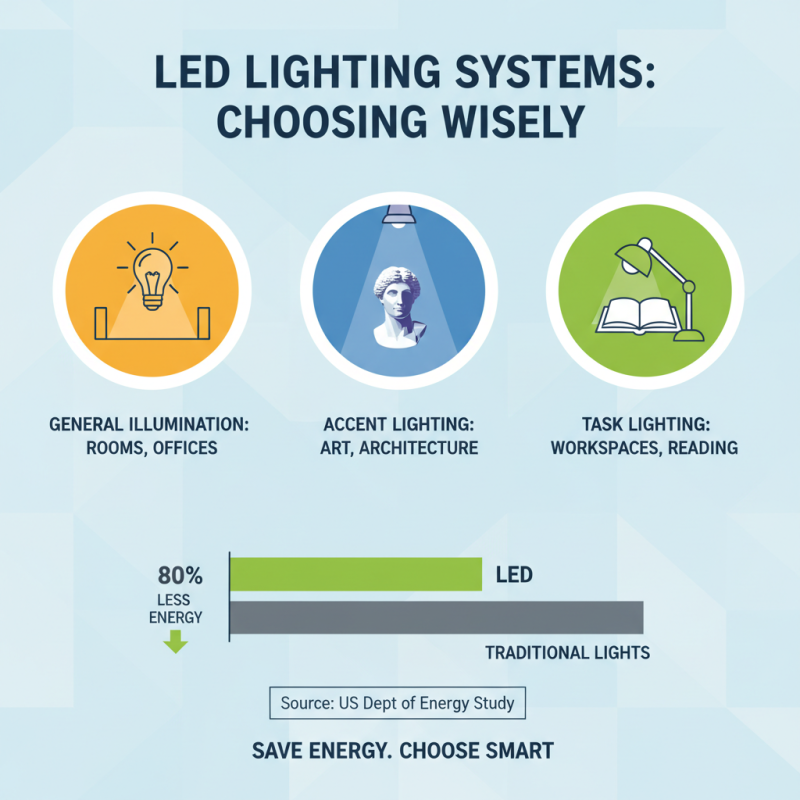
When selecting an LED lighting system, understanding the options is crucial. Different types of LED lights serve various purposes. For instance, general illumination, accent lighting, and task lighting all require different considerations. According to a recent study by the U.S. Department of Energy, LED lighting can cut energy consumption by up to 80% compared to traditional lighting options. However, this savings depends on the right choice of fixtures and usage scenarios.
Comparing costs is another important factor. Basic LED bulbs can range from $2 to $15 each. While cheaper bulbs may seem appealing, the longevity and energy savings may vary significantly. Some reports suggest that investing in higher-quality bulbs can provide better performance and longer life. However, not all high-priced options guarantee superior quality. It is essential to examine the lumen output and color temperature before making a decision. A common mistake is underestimating how a light's color can affect mood and space perception.
Another consideration is installation. Some systems are plug-and-play, while others may require complex wiring. Homeowners often overlook this detail, which can lead to unforeseen expenses. Adjustable systems, for instance, offer flexibility but may demand professional installation. Keep in mind that technological updates happen rapidly. The lighting you choose today may soon become outdated. Regularly reviewing your options can help maintain a balance between investment and utility.
Factors to Consider When Choosing LED Bulbs and Fixtures
When choosing the right LED lighting system for your home, several factors come into play. The color temperature of LED bulbs is essential. Most options vary from warm (2700K) to cool (5000K). A study by the Department of Energy noted that warm light creates a cozy atmosphere, suitable for living rooms and bedrooms. In contrast, cooler light can enhance focus in workspaces.
Another critical aspect is the lumens output. More lumens mean brighter light. Typically, a standard 60-watt incandescent bulb emits about 800 lumens, while a comparable LED bulb does the same with only 10-12 watts. This efficiency can potentially lead to a reduction of approximately 80% in energy costs over time. However, some may be discouraged by the initial purchase price of LEDs compared to traditional bulbs.
Moreover, the design of the fixture matters. Many homeowners overlook compatibility between bulb shape and fixture style. For instance, recessed lighting often requires specific bulb types that fit snugly. A mismatch can result in poor lighting performance. The long lifespan of LED bulbs, averaging 15,000 to 25,000 hours, is appealing. Yet, it raises questions about disposal and environmental impact. These are important reflections for consumers making their choices.
Installation and Maintenance Tips for LED Lighting in Homes
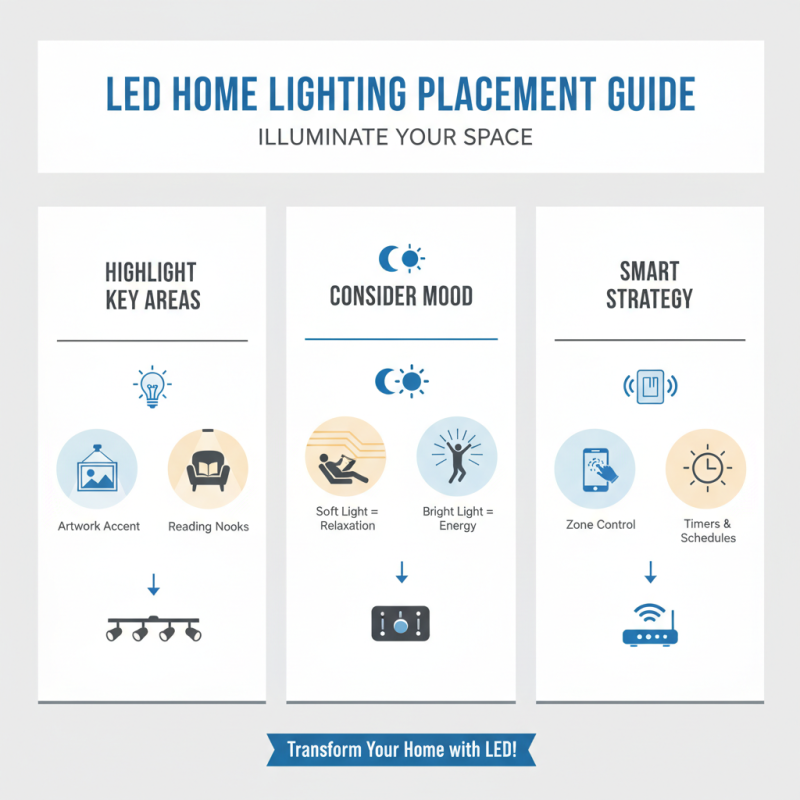
When installing LED lighting in your home, pay attention to placement. Highlight key areas like artwork or reading nooks. Consider the mood you want to create. Soft lighting works well for relaxation, while bright lights can energize a space.
Be mindful of the installation process. Make sure you have the right tools. A ladder, screwdriver, and wire cutters might be necessary. If unsure, consult a professional. Mistakes can lead to dimmer lights or even safety hazards.
Maintenance is crucial. Regularly check for flickering lights or changes in brightness. Dust can accumulate on fixtures, reducing efficiency. Clean them gently with a damp cloth. Remember, LED lights are designed to last, but they still need some care.